Tree removal refers to the process of taking down a tree that’s no longer safe or needed. The reason can be disease, damage, or development. However, the job requires training and proper tools.
In Spring Hill, Florida, storms are common, and trees grow fast. Removing a tree in a place like this can sometimes protect people and property. Tree cutting should always be handled by trained professionals with knowledge of local tree types, local weather patterns, and city regulations to ensure a safe and legal outcome.
In this complete guide, we’ll talk about what tree removal service in Spring Hill includes. You will also find when they’re needed and the benefits of working with tree professionals.
What Is Tree Removal and When Is It Necessary?
Tree removal becomes necessary when a tree becomes a danger. Signs like leaning trunks or decay tell you when to act. In some cases, even a healthy tree might need to be removed to prevent root damage to structures or to make way for a renovation project.
What is tree removal?
Tree removal means cutting down a tree and safely clearing it from a property. It involves assessing the risks, removing limbs, and either grinding the stump or leaving it as requested. Professional arborists follow specific techniques and safety standards to avoid damaging nearby plants, structures, or underground utilities.
What are the signs that you need to remove a tree?
Certain signs indicate that a tree may be dangerous or unhealthy. Waiting too long to address the following signs can increase the risks:
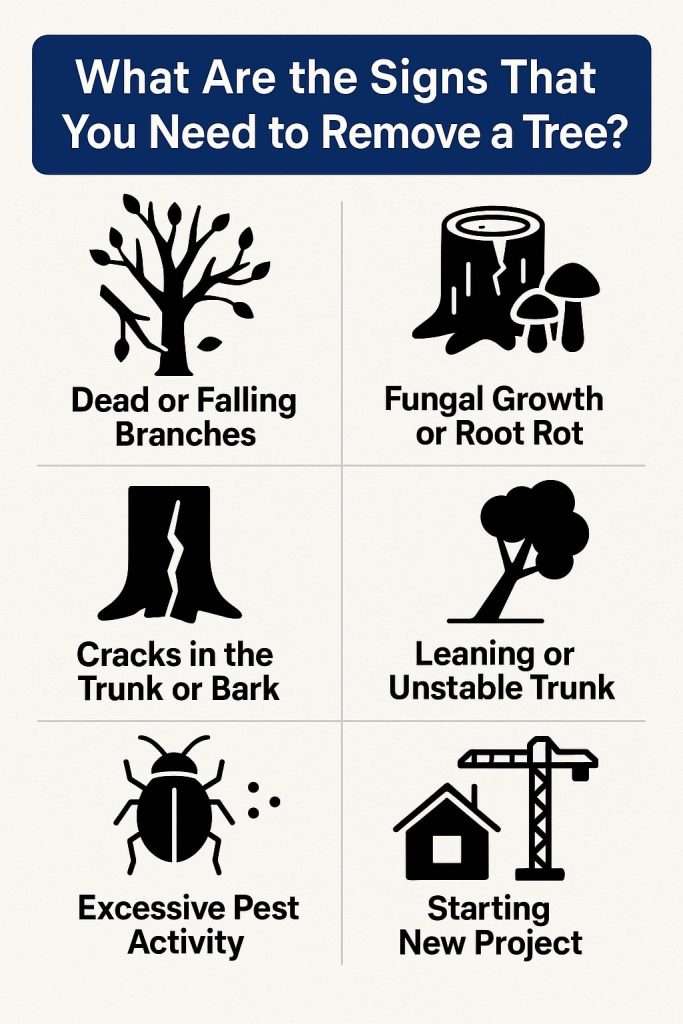
Leaning or unstable trunk
If a tree leans more than usual or appears unstable, its roots may be compromised. It is at risk of falling. This is especially dangerous near homes, driveways, or power lines.
Dead or falling branches
Frequent branch drops or dead limbs are signs of decay. This poses safety risks to your family and property. Even if the tree looks healthy, internal rot can cause sudden failures.
Fungal growth or root rot
Mushrooms or rot at the base may mean the tree is dying from the inside. A tree like this could fail unexpectedly. These conditions often spread to nearby trees if not addressed.
Cracks in the trunk or bark
Deep cracks or missing bark may show that the tree is structurally weak and prone to breakage. These weaknesses can lead to a sudden collapse during storms.
Excessive pest activity
Infestations can hollow out trees. It weakens them to the point of collapse during strong winds. Pests mostly take advantage of already weakened or dying trees.
For a full breakdown, check out our post on signs your tree needs removal.
What is the Cost of Tree Removal in 2025?
Tree removal pricing depends on a lot of factors. These signs include the tree’s size, location, species, condition, etc. Each job is different, and a one-size-fits-all price doesn’t apply. Costs may also be affected by emergency scheduling and disposal requirements.
Understanding Tree Removal Factors
Several variables impact the total cost of removal. Knowing these in advance can help you plan and budget effectively.
Tree size and height
Bigger trees require more effort. It also takes time to take down safely. Taller trees also pose more risk and may need special rigging equipment.
Tree location and accessibility
Hard-to-reach trees may need special tools or extra crew time to remove. Trees near structures, fences, or power lines add complexity to the process.
Tree condition and stability
Weakened trees pose safety risks and require more care, which can raise costs. Dead or storm-damaged trees may need to be taken down piece by piece.
Debris removal and cleanup
Hauling limbs and grinding stumps increases the job’s complexity. Some companies include cleanup, while others charge separately for this service.
Permits and local regulations
Some Florida cities require tree removal permits. Especially for large or protected trees. Obtaining a permit can add administrative time and small fees.
Is Tree Felling Covered by Insurance?
Sometimes. If a tree falls due to a storm and damages your home, insurance may cover the removal. However, if it’s a preventive job, it’s usually out of your own pocket. You should always confirm with your provider.
can help with required documentation. Our team provides the proper reports and photos to support your claim, making the insurance process easier.
We recommend reviewing what to do if a tree falls on your yard and contacting your insurer for specific guidelines.
How Can You Reduce Tree Cutting Costs?
Tree cutting doesn’t have to break the bank. Smart planning can lower the cost and help you avoid emergency fees.
Ways to reduce the cost:
- Schedule during the off-season: Crews are less busy in early spring or late winter. They offer better rates and quicker service during these windows.
- Bundle multiple services: Removing more than one tree at once can reduce labor and equipment fees. This is helpful if you’re planning a landscape upgrade.
- Handle light cleanup yourself: Removing small debris or wood may lower your final invoice. Just make sure it’s safe to do so.
- Keep the wood: Use it for firewood or mulch to skip disposal costs. Some services may also chip it for you on-site.
- Hire a local company: Avoid travel fees and get faster and more affordable services. Local teams also understand local regulations and native tree species.
Why Do You Need Professional Tree Service to Remove Trees Safely?
Removing trees is a multi-step process designed to be safe and efficient. A good team will explain each step clearly so you know what to expect.
Professional arborists follow a step-by-step process to remove a tree:
- Inspection and planning: Assess tree health and fall direction.
- Securing the area: Set up safety zones to protect people and property.
- Equipment setup: Lifts, ropes, or cranes are positioned to access the canopy.
- Sectional removal: Branches and trunk are cut down in parts.
- Stump removal or cutting base: Choose to grind or leave the stump.
- Cleanup: Clear away wood and debris to leave the site clean.
What Equipment Is Used for Tree Cutting?
Tree crews use a variety of specialized tools to safely and efficiently remove trees. The equipment chosen depends on the tree’s size, location, and overall condition. Here are common equipment professionals use:
- Chainsaws (gas, electric, or battery-powered)
- Hand saws and pruning saws
- Pole saws for high branches
- Axes and hatchets
- Loppers and pruning shears
- Wood chippers for branch disposal
- Climbing harnesses and ropes
- Safety helmets and face shields, etc.
How Long Does Tree Removal Take?
A small tree may take a couple of hours. Large or complex trees might take a full day. Emergencies are typically handled same-day. Weather and site access can affect the timing.
What Happens to the Tree After Removal?
Once the tree is safely removed, the remaining material goes through a disposal or repurposing process. In most cases, the felled tree is cut into manageable logs and either hauled away by the crew or chipped on-site into mulch.
Clients often have the option to keep the wood for personal use, such as firewood, woodworking, or even rustic home décor. Good wood can be reused for furniture or garden use. Branches become mulch through chipping. Stump grinding finishes removal, with arborists advising on the best choice for long-term care.
Is Tree Felling Dangerous?
Yes, especially without proper training. Removing large trees carries safety risks and can damage property if not done correctly. That’s why it should always be handled by trained professionals.
What Are the Risks of DIY Tree Removal?
DIY removals can lead to injury or costly damage. Without training, you risk misjudging cuts or falling limbs. Professionals are insured and know how to manage hazards safely. Even seemingly small trees can become unpredictable when tools are used improperly.
Do You Need Permits to Remove a Tree?
In many Florida cities, permits are required for removing trees if they are large or protected species. If you don’t get one when it’s required, you may have to pay fines or delays in property development.
What Are the Legal Requirements for Tree Felling?
Some cities require permits for tree felling over a certain size or those in conservation areas. Rules vary. So, check your local codes or ask your tree company. It’s your responsibility as the property owner to be aware of the rules.
How Do You Get a Tree Removal Permit?
You’ll usually submit an application with tree details. Some areas may need photos or an arborist’s report. Your tree service can often help with filing paperwork and navigating city guidelines. You can find everything you need to know about getting a permit here.
What Happens if You Remove Trees Without Permits?
You may face fines or be required to replace the tree. It can also delay property improvements or cause issues when selling your home. Always check before cutting.
How to Choose a Tree Removal Service
Not all companies offer the same quality or safety standards. Hiring the right one ensures the job gets done right and prevents future headaches.
Check for Qualifications
Look for credentials that prove knowledge and professionalism.
What Qualifications Should Tree Removal Companies Have?
- Florida business license
- Liability and workers’ comp insurance
- ISA certification
- OSHA-compliant training
- Strong local reviews
Get Multiple Estimates
Don’t start the job with the first estimate that you get. Compare pricing, timelines, and services that are included. Getting 2–3 estimates helps you make an informed choice.
What Should Be Included in a Tree Felling Estimate?
A proper tree felling estimate should outline labor, equipment use, debris cleanup, stump grinding, and permit handling if needed. It should also include whether tree trimming or pruning is necessary beforehand. Transparent pricing ensures there are no surprises, and the estimate should reflect your specific tree care needs.
What Red Flags Should You Avoid When Hiring?
Watch out for vague pricing, lack of insurance, no written contract, or refusal to show credentials. Avoid companies that rush you or dismiss questions about safety or the process of tree removal. A reputable team will prioritize clear communication, professionalism, and proper tree care practices.
What Should You Expect After Tree Cutting?
After a tree is cut, you may notice uneven ground, leftover sawdust, or exposed roots. Depending on the size of the felled tree, large indentations or compacted soil may remain. Tree Fellas Tree Service can help with post-removal cleanup and additional tree care services, including stump grinding and soil restoration.
If you plan to plant again, our team can also assist with tree pruning or trimming to prepare the surrounding landscape. Every yard reacts differently, but with the right aftercare, your property will recover beautifully.
How Do You Care for Your Landscape After Tree Removal?
You can fill holes with soil, rake the area, and reseed if needed. Let the ground settle before replanting. Mulch or ground cover can help prevent erosion. Keep the area watered if planting grass.
What Are Sustainable Tree Removal Practices?
Sustainable practices reduce the environmental toll of removing trees. You should use eco-friendly gear, recycle debris, and replant native species when possible.
At , we aim to leave your landscape better than we found it. When removal is necessary, we try to minimize the impact with careful planning. Thoughtful disposal and recommendations for replacing the lost tree with something that fits your space also fall within our responsibilities.
Where to Find Qualified Tree Removal Services Near You
If you’re ready for expert help, is your go-to team in Spring Hill, Florida. We’re licensed, insured, and deeply familiar with local trees and regulations. Whether you’re clearing space or removing a risk, we offer professional service with local care. We combine professional skill with a neighborly touch, because we care about the communities we serve and live in. Don’t leave your property’s safety or your landscape’s health in the hands of just anyone. Contact us today for a free quote and personalized advice.