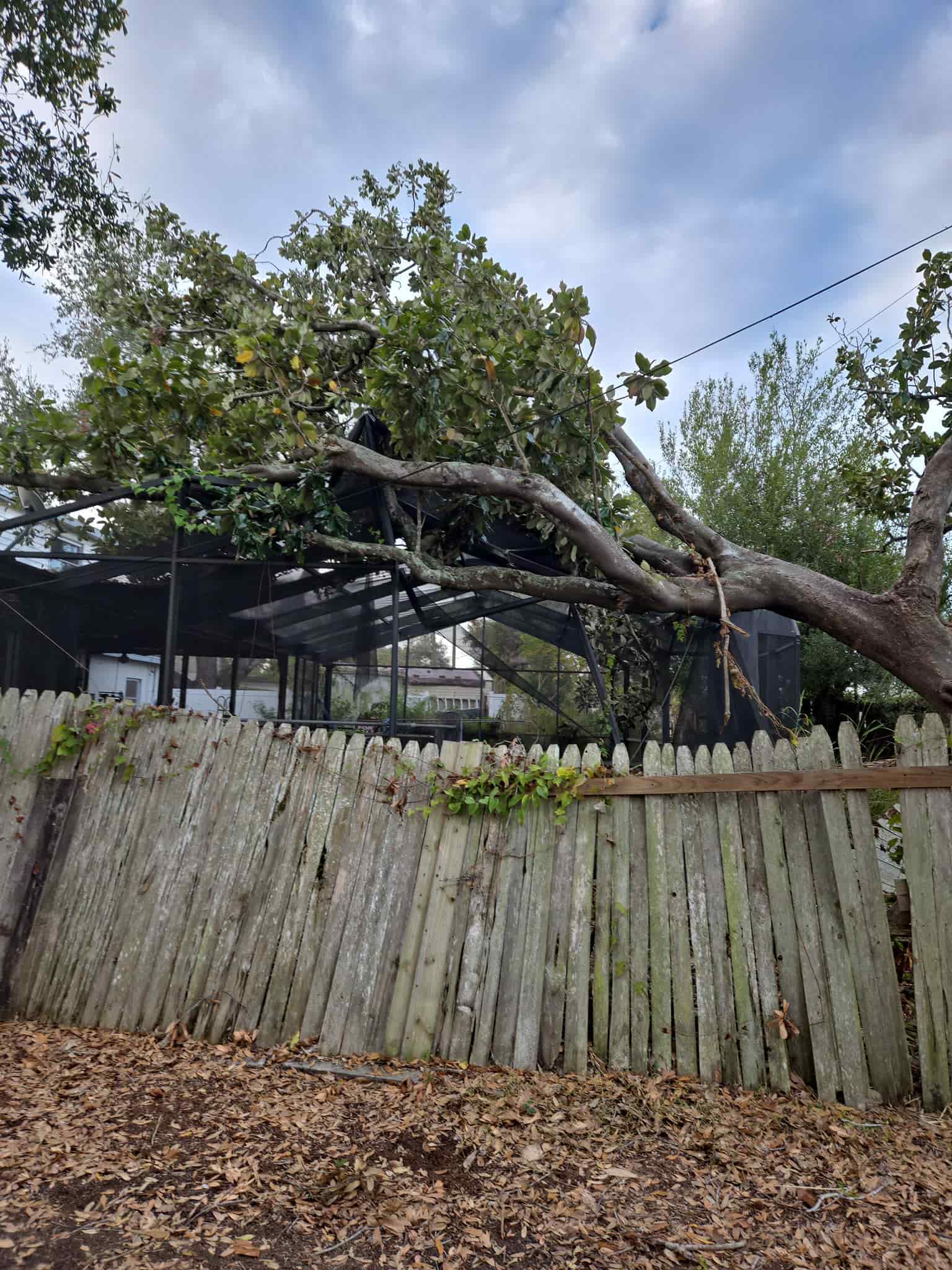
If your neighbor refuses to remove a hazardous tree in Spring Hill, FL, you have options. You can document the risk and notify local code enforcement. In many cases, you can trim branches that cross your property line. Legal action or insurance claims also become options if the tree causes damage.
The right steps protect your property and keep you out of legal trouble. And this article explains what you need to know.
What to Do If a Neighbor Refuses to Remove a Tree in Spring Hill, FL?
When a dangerous tree is ignored, the right steps protect your home and finances. While professional tree removal keeps you legally safe, try the following first.
Document the Risk
Take clear photos of visible decay, dead limbs, and leaning structures. Photograph root damage and any storm impact you notice. Dated photos and written records create proof if you need it later.
Notify the Neighbor
Send a certified letter to your neighbor that explains the hazard you’ve identified. Written notice makes them aware of potential liability. It also gives you legal documentation if damage occurs.
Contact Code Enforcement
Spring Hill and Hernando County have code enforcement departments that inspect trees. Officials review reported hazards and assess the actual risk. They may issue a formal notice requiring your neighbor to act.
Trim Encroaching Limbs
Yes, you can legally trim your neighbor’s tree branches or roots crossing your property line. However, trimming must not harm the tree’s overall health. You also can’t enter their property to do the work.
Consider Legal Action
If you notice a risky tree, take legal action because courts often step in if the tree is dead, dying, or hazardous. But legal action takes time and money to pursue. If negligence is proven, judges can order removal.
Use Insurance Coverage
Your homeowners’ insurance covers damage after a tree actually falls. Your insurer may then pursue the neighbor through subrogation. This process holds negligent property owners financially responsible.
Things You Need to Consider Before Taking Any Action
Certain situations change how tree disputes are handled and what you can do. Review these factors before taking action.
- HOA Rules: Your HOA may have the authority to enforce tree safety and maintenance rules.
- Shared Trees: Trees growing on property lines require mutual consent from both owners for removal.
- Protected Trees: Local and county tree protection rules may require permits to remove a tree.
- Healthy Trees: Neighbors are typically not liable for damage from healthy trees during natural storms.