Florida law usually treats fallen trees as an “Act of God.” If the tree was healthy, you must pay for the cleanup on your property. Responsibility only shifts to the neighbor if the tree was visibly dead, diseased, or neglected before it fell.
Read this guide to navigate complex local liability rules. Discover specific steps to manage property damage and avoid legal disputes effectively.
What Steps Do You Need to Take When a Neighbor’s Tree Falls on Your Yard?
A tree can fall due to a number of reasons. You should call a local company for emergency tree service in such situations to prevent further damage.
Document the Damage Immediately
You should take clear photos of the trunk, branches, and any property impact. Florida insurance adjusters require visual proof to process claims efficiently. Capturing the condition of the bark helps prove if the tree was neglected. This evidence protects your financial interests later.
Identify the Tree Species
Determine if the debris belongs to a Live Oak or a Slash Pine. Different species require specific disposal methods under Florida waste management codes. Knowing the wood type helps local crews provide accurate removal quotes. Dense hardwoods often cost more to haul away.
Contact the Insurance Company
Next, it’s important to report the incident to your homeowners’ insurance provider right away. Florida policies often cover debris removal if a structure is hit. Provide the photos and specific details about the tree’s previous health. This step ensures you receive the maximum insurance coverage when a neighbor’s tree falls on your property.
Check Local City Ordinances
Visit your local municipality website for specific debris pick-up schedules. Cities like Orlando or Miami have strict rules for stacking logs. You must avoid placing heavy Sand Pine limbs near utility lines or fire hydrants. Following these rules prevents you from receiving expensive city fines.
Hire a Certified Arborist
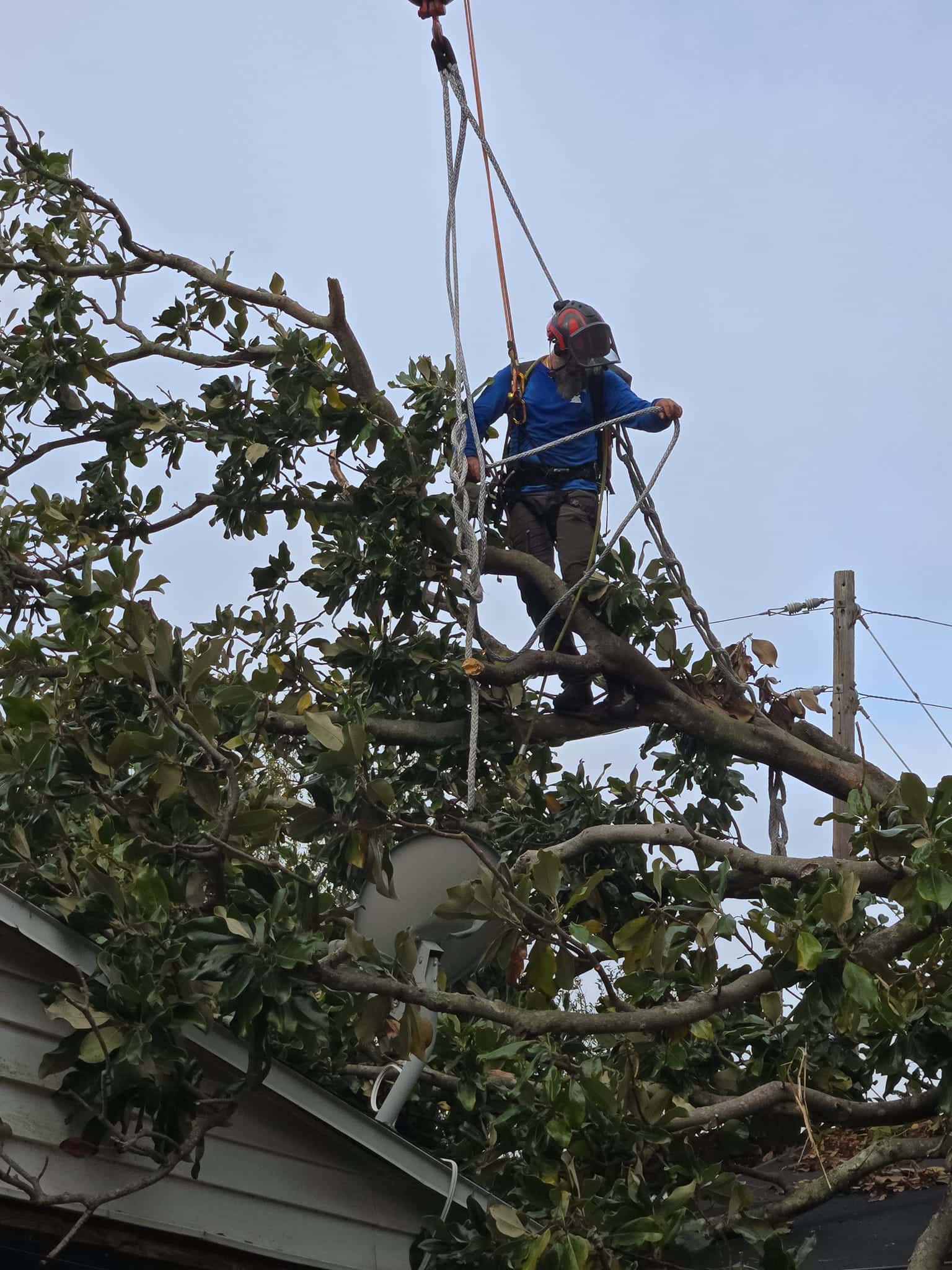
Search for a licensed professional to handle the heavy lifting safely. Large Sabal Palms or heavy oaks require specialized equipment for removal. Professionals carry liability insurance, which protects your home during the process. Verify their credentials through the Florida Chapter of the ISA.
Clear the Remaining Debris
Ask the team you have hired to rake up small twigs and leaves once the heavy trunk is gone. Clean yards prevent pests like termites or carpenter ants from nesting. Use yard waste bags for smaller materials according to local Florida guidelines. A tidy space restores the safety of your outdoor area.