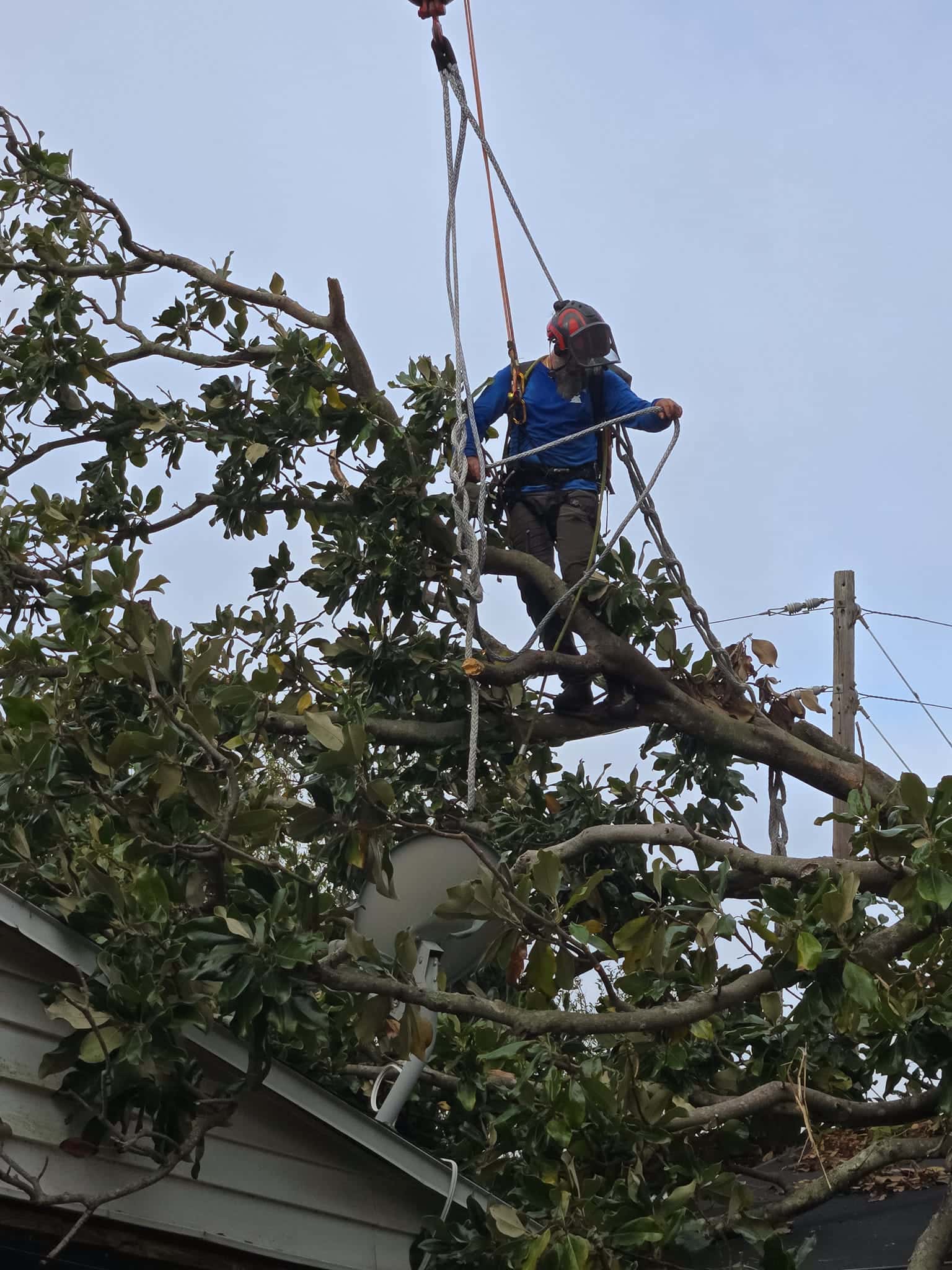
You need to check your yard for dangerous trees first. Take photos of all damage for insurance and FEMA claims. This documentation protects you from costly mistakes later. A licensed tree service company can also help you with post-storm damage.
This guide shows you what to do after a storm. Learn the right steps and how to make smart choices for tree removal after a hurricane.
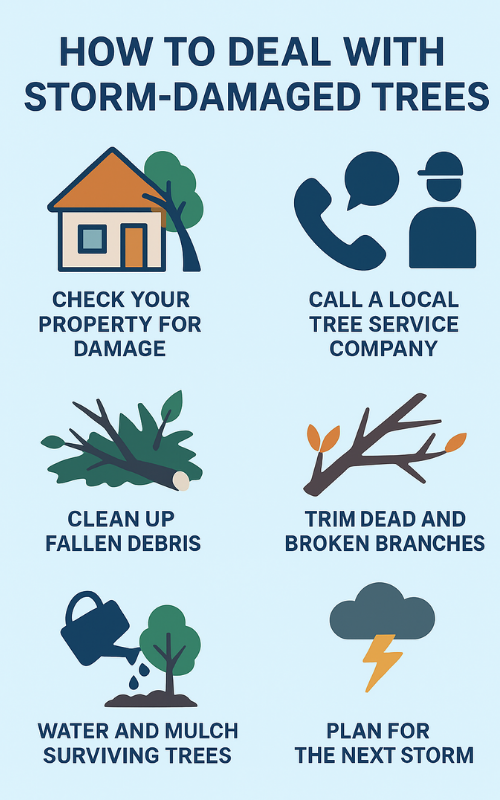
How to Deal with Storm-Damaged Trees
Recovery starts the moment the storm passes. You need to act fast to prevent more problems. The steps below keep your family safe after a hurricane. They also help you save trees that survived the damage.
Check Your Property for Damage
Stay away from hanging branches and leaning trees. Downed power lines can kill you in seconds. Take photos and videos of every damaged tree for an insurance claim. Hidden root damage may show up weeks after the hurricane. Moreover, some trees may look fine at first but can fall later if you are not observant.
Call a Local Tree Service Company
Hire an insured Spring Hill tree company you can trust. Post-storm scams are common in Florida. Some contractors charge double or disappear with deposits. There will be signs you need to remove a tree immediately. Cracks in the trunk and leaning trees near your home always mean danger.
What would it cost to remove a tree after a hurricane in Spring Hill?
Emergency tree removal can cost you from $1,000 to $5,000 in Spring Hill. Tree size makes a big difference in price. But a fallen tree costs less to haul away than ones still standing. You’ll pay more if the tree leans against your house. Dangerous situations often need cranes and other equipment that affect the cost.
Clean Up Fallen Debris
FEMA only collects debris from public right-of-way or when it’s in the public interest. Your yard cleanup is your job unless a tree blocks access. So, stack branches at the curb separately from other waste. Don’t mix tree limbs with household trash. Hernando County has specific pickup rules after storms.
Trim Dead and Broken Branches
Not every damaged tree needs complete removal. Many live oaks survive with good tree trimming. Splintered branches and stripped bark are common in Florida. Remove any broken limbs to prevent decay. Your tree can recover fast if the trunk stays healthy.
Water and Mulch Surviving Trees
Take care of your trees and help them recover fast. Water the base weekly to keep roots healthy. Mulch around the trunk helps hold that moisture longer. It helps minimize beetles and disease attacks. Fertilizer gives them the strength they need to fully recover.
What are the strongest trees in a hurricane?
Live oaks hold up incredibly well when hurricanes hit. Their roots go deep, and the wood bends without breaking. Sabal palms are nearly impossible to knock down. Bald cypress and southern magnolia do great in high winds. Plant these if you want trees that last.
Plan for the Next Storm
Prepare your trees and properties before the next storm arrives in the following way:
- Trim trees before storm season begins
- Remove weak or damaged branches early
- Choose strong trees like live oaks
- Plant sabal palms for better wind resistance
- Keep new trees away from your home
| Tree Size | Planting Distance |
| Small Trees (up to 30 feet) | 10 feet |
| Medium Trees (30–70 feet) | 15–20 feet |
| Large Tree (over 70 feet) | 20 feet or more |
What kind of trees are most likely to fall in a storm in Florida?
Pines go down fast during hurricanes here in Florida. Laurel oaks and water oaks fall often, too. Their roots don’t grow very deep into the ground. Chinese elms snap easily because the wood is weak. Australian pines are another problem tree in storms.
What Mistakes to Avoid After a Hurricane
Rushing your cleanup after a storm causes serious problems. Homeowners get hurt trying to save money. Others lose thousands to scam contractors. Poor documentation can also lead to denied insurance claims. Here are the biggest mistakes people make in the Spring Hill area.
- Cutting large trees yourself without proper training
- Hiring unlicensed contractors who disappear with deposits
- Paying the full amount before work starts
- Starting cleanup before taking damage photos
- Thinking FEMA will pay for everything
- Leaving cracked trees that could fall later
Call for Quick Support
Trees down after a storm? We can help you out. ensures emergency tree removal any time you call us. Our experienced arborists have dealt with plenty of hurricane damage around here.
We’re licensed and insured, which matters when dangerous trees are involved. Our service also includes cleanup and haul, so you don’t need to worry about that either. Give us a call at 727-615-2084, and we’ll come take care of it.